power deficit and quality of public services remain key challenges
Barak Bani Digital Desk, Silchar, November 23: Assam Chief Minister Himanta Biswa Sarma has highlighted what he described as significant transformation in the state’s infrastructure over the past decade, particularly in connectivity, education and healthcare. Pointing to the period since the BJP came to power in 2016, the Chief Minister claimed that Assam has witnessed a new phase of infrastructural development. In a message shared on social media, he presented a series of statistics highlighting the achievements of the past ten years, describing the period as a ‘decade of transformation’ for the state. However, alongside the government’s development claims, concerns over Assam’s power deficit and the challenge of ensuring quality healthcare and education for ordinary citizens continue to draw attention.
In his statement, Sarma observed that Assam’s overall development had once been severely hampered by violence, unrest and prolonged uncertainty. According to him, the state has gradually overcome that stagnation over the past decade and moved towards a new phase of progress. He maintained that the end of prolonged instability has helped Assam gain fresh momentum in development. Describing the achievements as only the beginning, the Chief Minister asserted that the pace of development would continue in the coming years.
According to the figures presented by the Chief Minister, Assam has made considerable progress in connectivity infrastructure over the past ten years. The number of bridges over the Brahmaputra has increased from three to seven.
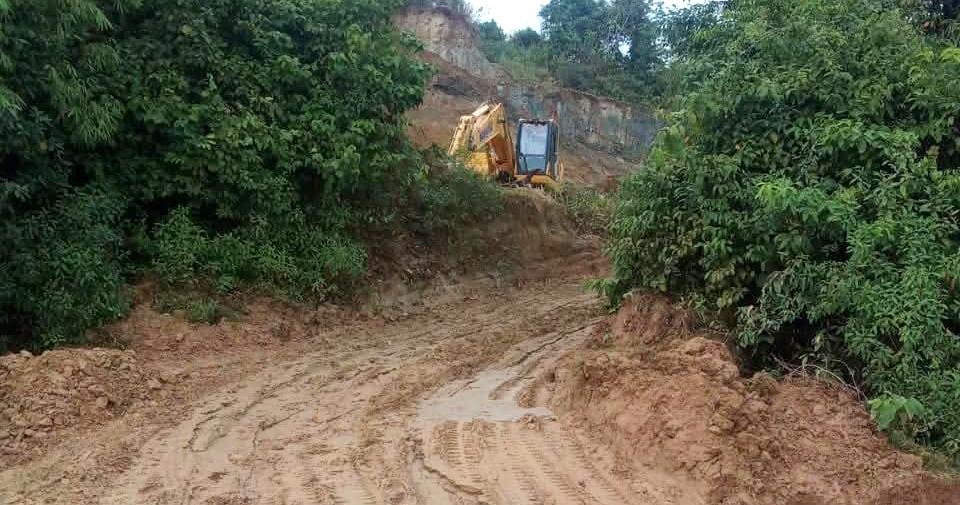
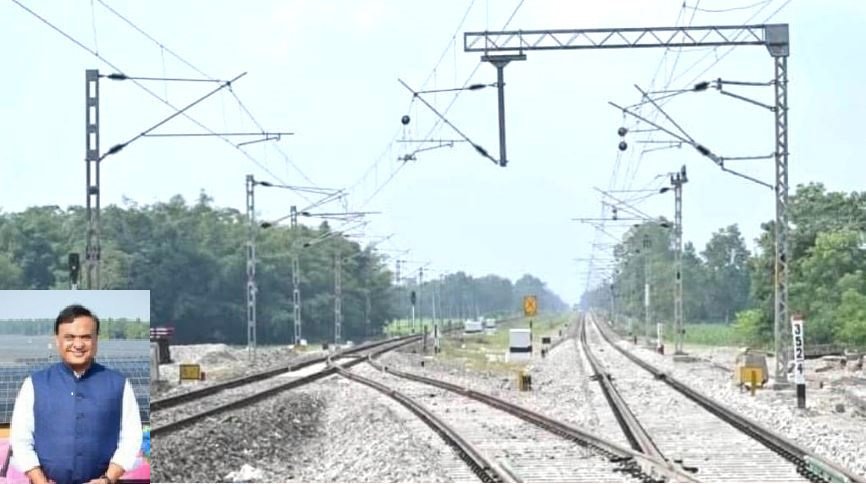
Under the Pradhan Mantri Gram Sadak Yojana (PMGSY), a total of 32,212 kilometres of rural roads have been constructed across the state. Similarly, railway electrification, which was virtually negligible earlier, has reached 2,590 kilometres over the past decade. The modernisation of Guwahati International Airport has also significantly enhanced its annual passenger-handling capacity, increasing it from 34 lakh to 1.31 crore passengers.
According to observers, improved road, bridge and railway connectivity has strengthened links between remote areas and major centres of the state, potentially giving a boost to economic activities and transportation. Alongside connectivity, the Chief Minister also highlighted the expansion of higher education and medical education infrastructure. According to the figures shared by him, the number of medical colleges in Assam has increased from six to 14. Consequently, the number of MBBS seats has risen from 726 to 1,975.
The number of government engineering colleges has increased from four to seven. Meanwhile, government polytechnic institutions have grown from 10 to 26, while the number of seats in these institutions has increased from 1,545 to 4,385.
However, the impressive infrastructure figures have not entirely dispelled concerns over the state’s electricity situation. Government data indicates that Assam’s peak-hour power demand stands at 2,809 MW, while off-peak demand is around 2,117 MW. Against this, the state’s own power generation capacity is only 420 MW. The substantial gap between demand and domestic generation has forced the state government to depend heavily on power purchases from external sources, often at high costs.
To address this challenge, the state government has placed greater emphasis on solar power generation. Assam currently has a solar power generation capacity of 893 MW, which the government aims to increase to 3,500 MW by 2030. The target is expected to reduce dependence on conventional power sources and strengthen the state’s energy security. However, how far Assam can achieve genuine self-reliance in the power sector through this initiative remains to be seen.
Infrastructure Expansion Versus Quality of Services
While the government has highlighted the growing number of medical colleges and educational institutions, questions remain over how much of this expansion has translated into tangible benefits for ordinary people.
According to local observers and sections of the public, despite the increase in the number of institutions and infrastructure, several facilities continue to face shortages of doctors, specialist physicians, modern medical equipment and qualified teaching staff. As a result, many patients still have to travel outside the state in search of advanced medical treatment. The quality of education and the availability of adequate teaching personnel also remain important concerns.
Overall, the statistics presented by the Chief Minister indicate considerable expansion of Assam’s physical infrastructure over the past decade. Improvements in roads, bridges, railways, aviation, medical education and technical institutions have been highlighted as major achievements.
However, the real test for the state government lies in bridging the gap between electricity demand and domestic generation, achieving the ambitious solar power target by 2030, and ensuring that the infrastructure already created delivers accessible and quality healthcare and education to the people. Ultimately, the success of Assam’s development journey will be measured not merely by the number of projects and institutions established, but by the extent to which they improve the everyday lives of its citizens.

 Barak Bani Dainik