
BarakBani Digital Desk, September 27: When political leaders take to public platforms, passionately preaching ideology, principles and moral values, the reality behind the scenes can sometimes reveal a shocking picture of opportunism and self-interest. Silchar, the principal city of the Barak Valley, is currently witnessing a controversy that has raised serious questions about the conduct of two prominent political figures belonging to opposing political camps.
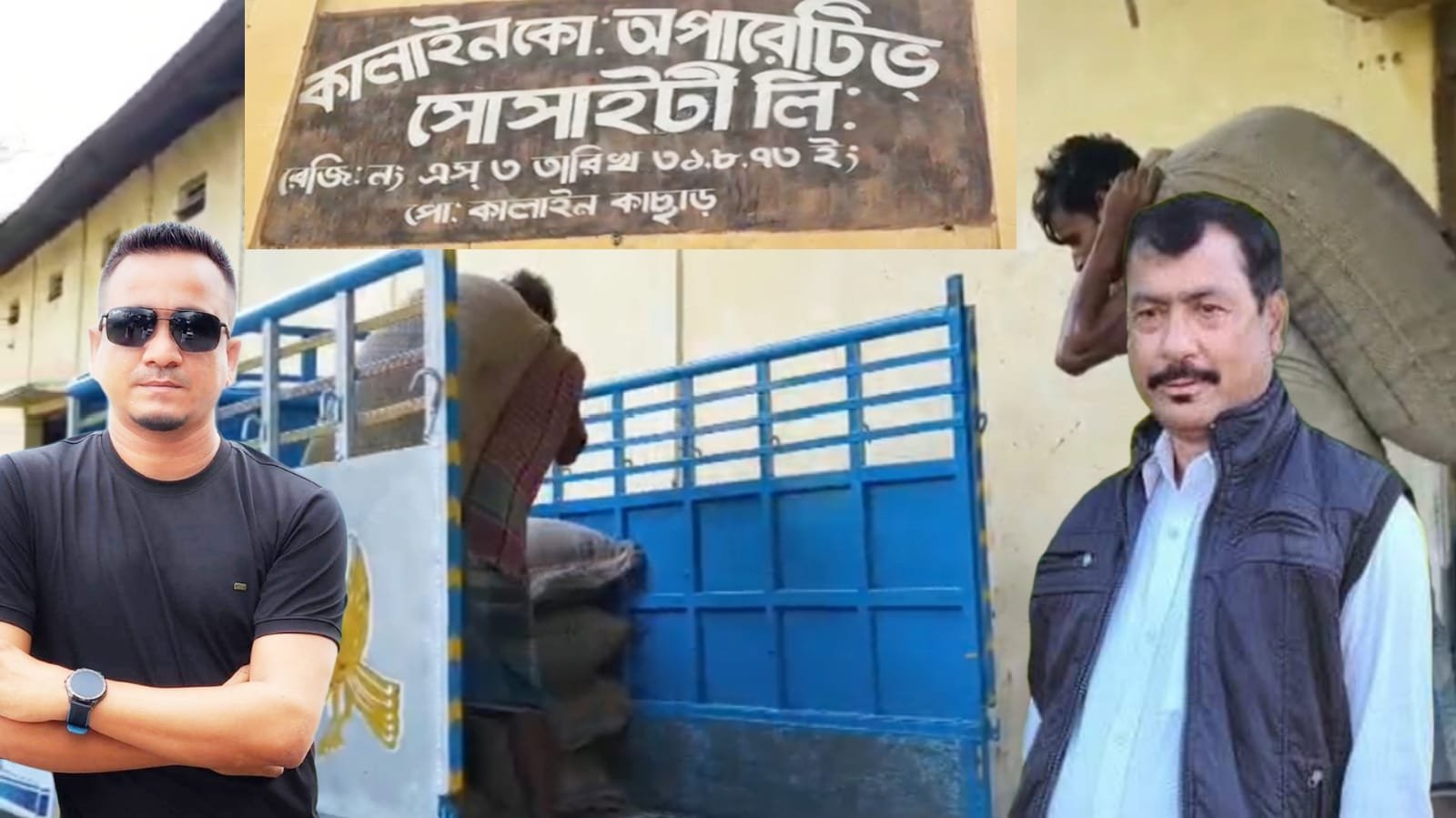
On one side stands the Congress, the principal opposition party, while on the other is the BJP, the ruling party in Assam. Ideologically, the two parties are supposed to represent distinctly different political philosophies. Yet, strikingly, controversies surrounding their respective Cachar district presidents, Sajal Acharya of the Congress and Rupam Saha of the BJP, have triggered a common question among residents: Has the political competition in Silchar shifted from public service and ideological commitment to a race for personal enrichment through influence, power and political connections?
While the Congress district president has faced allegations relating to the proposed sale of valuable party office land, a controversy that reportedly cost him his position, the BJP district president is facing serious allegations of securing a substantial share of government contracts for himself and his close associates by allegedly leveraging his political influence.
The contrasting controversies have now drawn sharp reactions from conscious citizens, eminent educationists, senior advocates, intellectuals and even grassroots party workers who feel increasingly marginalised by the conduct of their political leadership.
Cachar District Congress President Sajal Acharya stripped of his post following damaging allegations over the sale of the party office land.
The controversy surrounding Sajal Acharya, former president of the Cachar District Congress Committee, has reportedly left many grassroots Congress workers deeply disillusioned. The Congress, one of India’s oldest political organisations, has historically played a significant role in the country’s freedom movement and the struggle to protect people’s democratic and fundamental rights. However, allegations concerning the proposed sale of valuable land belonging to the party office have raised uncomfortable questions about the management and protection of the organisation’s own assets.
A political party’s office and properties are institutional assets, not the private estate of any individual office-bearer. Yet, allegations that an attempt was made to facilitate the transfer or sale of party property through the misuse of organisational authority have triggered considerable resentment within political and civil society circles.
The controversy reportedly resulted in Acharya losing his position as district president, bringing considerable embarrassment to the Cachar Congress leadership. Several prominent lawyers and intellectuals in Silchar have questioned how a leader facing controversy over the proposed sale of his own party’s property can credibly speak about transparency, accountability and corruption in public life. They argue that the alleged attempt to deal with the party’s valuable property as though it were a personal real estate asset has undermined the credibility of an organisation built on a long political legacy.
For ordinary Congress workers, who have devoted years to the organisation by carrying its flag through difficult political circumstances, the controversy has become a matter of deep disappointment. Many are reportedly questioning whom they should look up to when allegations of this nature emerge against the party’s own district leadership. The episode has also raised a broader concern: whether political office-bearers, even while occupying positions in the opposition, can disregard organisational interests and public trust in pursuit of personal advantage.
Ruling party district chief Rupam Saha faces severe backlash for allegedly monopolizing government contracts through political influence.
On the other side of the political divide, allegations surrounding Rupam Saha, Cachar district president of the ruling BJP, have brought the issue of political influence and government contracting into the spotlight. Serious allegations have surfaced that Saha and individuals close to him are securing a substantial share of government contracts, particularly those under the Public Works Department (PWD) and other government departments, allegedly by using the influence and authority associated with his position as district party president.
His supporters have reportedly been quick to defend him with a straightforward argument: Is there any law that prevents a district president from engaging in contractual business? Legally speaking, engaging in business or undertaking government contracts is not, by itself, a crime. However, the central issue is not whether a political leader has the right to conduct business. The real question concerns the possible misuse of political influence, preferential treatment and the fairness of public procurement processes.
Can a person holding the highest organisational position in a district ruling party simultaneously exercise political influence in a manner that allegedly gives him or his associates an undue advantage in securing government contracts? Eminent educationists and economists in Silchar have reportedly expressed concern over the ethical implications of such allegations. They maintain that while everyone has the right to pursue legitimate business activities, the situation becomes fundamentally different when political authority is allegedly used to influence the allocation of public contracts.
If government-funded development projects, financed through taxpayers’ money, become a means of strengthening the financial interests of politically influential individuals, the very foundation of transparency and public accountability is put at risk. The question, therefore, is not simply whether a district party president can be a contractor. It is whether the principles of fairness, equal opportunity and institutional accountability are being upheld in the process of awarding government projects.
Political Patronage Replacing Employment and Public Service?
Perhaps even more disturbing is the political culture that appears to be developing around influential leaders in the city. A section of unemployed young people, instead of pursuing independent employment opportunities, are allegedly spending much of their time following political leaders, attending meetings and functioning as personal aides and loyalists in the hope of securing future benefits.
At party-level meetings and organisational gatherings, efforts are reportedly being made to mobilise women in large numbers, with expectations of gaining access to various small government schemes and other benefits.
Meanwhile, social media has emerged as another platform for political self-promotion. Making reels, posing beside influential leaders, uploading photographs with bouquets and displaying proximity to political personalities have increasingly become visible features of local political activity. For some, political visibility appears to have become a full-time occupation, replacing meaningful public engagement and constructive work.
Long speeches from public platforms, carefully staged appearances before cameras and constant efforts to project personal influence seem to have taken precedence over addressing the everyday problems of ordinary citizens.
While leaders expand personal empires, Silchar grapples with crumbling roads, severe water crises, and chronic traffic congestion.
While political leaders are allegedly occupied with expanding their personal influence and business interests, the condition of ordinary residents tells an entirely different story. For middle-class families, daily wage earners and unemployed youth, the reality of Silchar is far removed from the grand development claims made on political platforms.
A visit to different parts of the city exposes the deteriorating condition of basic civic infrastructure. Roads riddled with potholes have become hazardous for commuters. Traffic congestion continues to cause hours of inconvenience. The drainage system remains inadequate, with even moderate rainfall causing waterlogging in several localities. The shortage of safe drinking water continues to trouble residents. Despite these persistent problems, effective and lasting solutions remain elusive.
The contrast is particularly striking. Leaders of the ruling party appear busy highlighting their achievements, while opposition leaders are often accused of limiting their responses to occasional statements and social media posts. Meanwhile, the city’s fundamental civic problems continue to deteriorate without any comprehensive solution. For residents, the question is simple: If political leaders are so occupied with development, why does the condition of the city continue to expose such glaring shortcomings?
Intellectuals, lawyers, and common citizens warn that the era of empty promises is over, demanding complete transparency and visible development.
Senior advocates, teachers and members of the intellectual community in Silchar have reportedly expressed strong displeasure over the controversies surrounding the two district presidents. Their argument is that people of the Barak Valley did not elect political representatives to build private business empires, engage in controversial property transactions or establish personal contracting networks.
The allegations surrounding former Congress district president Sajal Acharya over the party land controversy and those concerning BJP district president Rupam Saha over government contracting have become two sides of the same coin in the eyes of many concerned citizens.
Although the two leaders belong to opposing political parties, critics argue that the controversies have exposed a common concern about the growing gap between political promises and public accountability. Citizens are increasingly questioning whether political positions are being treated as responsibilities towards the people or as opportunities for personal advancement.
Enough of Empty Promises’: Citizens Demand Transparency and Accountability
Conscious citizens of Silchar have issued a strong warning to political leaders, making it clear that the era of approaching voters with folded hands and making tall promises of development during election campaigns cannot continue indefinitely. People are no longer willing to remain satisfied with speeches about personal achievements, political influence or individual prosperity.
They want tangible evidence of development, transparent allocation of government projects, accountability in public expenditure and visible improvements in the city’s infrastructure and civic services.
Citizens insist that there is nothing inherently wrong with political leaders pursuing legitimate personal business interests. However, such interests must never come at the expense of public resources, institutional integrity or the rights of ordinary people. The message emerging from the city’s civil society is unmistakable: Personal prosperity may continue, but the actual development of Silchar cannot remain confined to government files, official announcements and political speeches.
People are now determined to seek answers about every development project, examine how public funds are allocated and demand accountability from those entrusted with public responsibilities. Political leaders who seek public support during elections must also be prepared to answer questions about their performance once they assume positions of power. For the people of Silchar, the time has come to look beyond political slogans and demand measurable results.
The ultimate question confronting both the Congress and the BJP is no longer who can deliver the most impressive political speech, but who can demonstrate genuine commitment to public service, transparency and the development of Silchar.


 Barak Bani Dainik