Barak Bani Digital Desk, Silchar, 26 November: Allegations of sexual assault on a nine-year-old child, the family’s repeated visits to the police station, alleged failure to take prompt action against the accused despite lodging a complaint, the eventual approach to the Additional Superintendent of Police (Crime), and police action only after the matter came to light through the media the disturbing sequence of events in the Rangirkhari case has now gone far beyond the arrest of the accused.
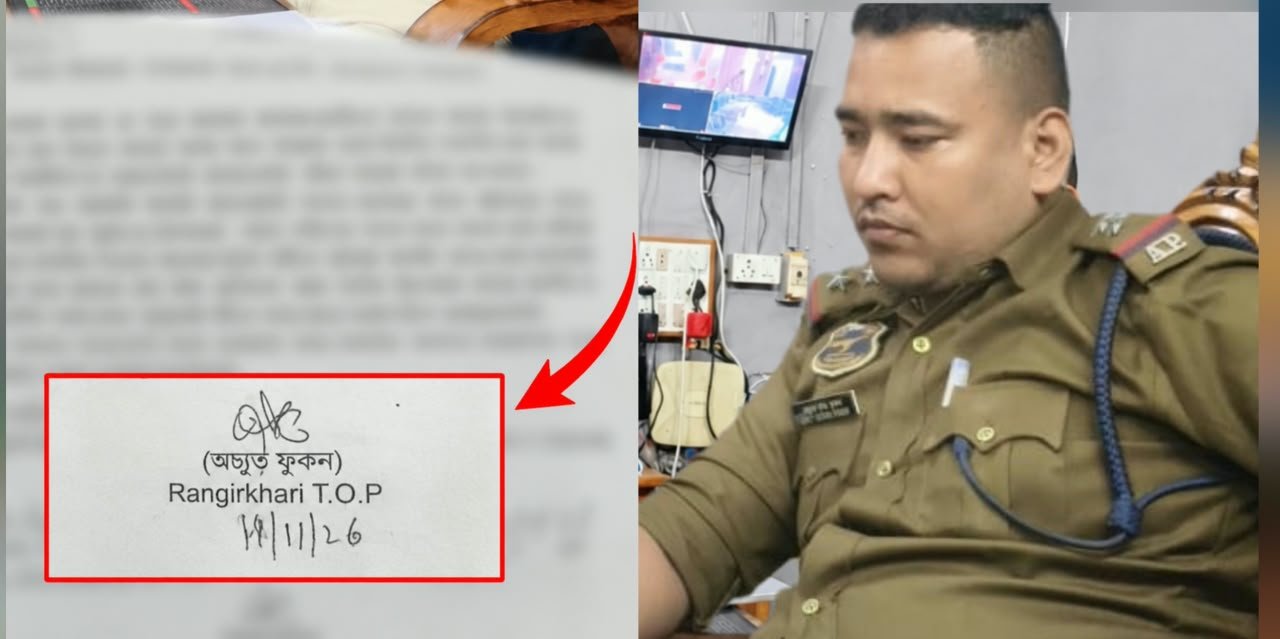
Serious questions are being raised over the initial role of the police, alleged negligence in the discharge of duty and the accountability of senior officers. Following the arrest of accused Raju Roy and the suspension of two Rangirkhari police personnel, Ananta Sinha and Haripada Roy, over alleged dereliction of duty, the spotlight has now shifted to Achyut Phukan, In-Charge of Rangirkhari Police Outpost.
The incident reportedly took place on November 9. According to the allegations, the child was sexually assaulted at around 6.30 pm that evening. At around 7 pm, the child informed family members about the incident. The family has further claimed that the child had allegedly been subjected to sexual abuse on several earlier occasions as well.
Following such a serious allegation, the family approached the police seeking action. According to the child’s grandmother, Mitu Roy, a complaint was lodged at Rangirkhari Police Outpost on November 11. However, despite informing the police, the family alleged that no effective action was taken against the accused for a considerable period. Even after nearly 11 days had passed, when the family allegedly failed to see any effective action against the accused, they were eventually compelled to approach the Additional Superintendent of Police (Crime).
Why did the family have to approach a senior police officer after such a serious allegation involving a nine-year-old child? Was the gravity of the complaint properly understood at the initial stage? Were necessary steps taken immediately? Was any serious effort made to apprehend the accused without delay? These questions began to surface as the case unfolded.
After the matter was reported in the media, it triggered widespread public reaction. Through its series of reports, Barak Bani also raised questions over the initial response of the police and the subsequent handling of the complaint. Finally, on November 23, police arrested accused Raju Roy from the Rangpur area of Silchar. Alongside the arrest, two Rangirkhari police personnel, Ananta Sinha and Haripada Roy, were suspended on charges of dereliction of duty.
The police action is undoubtedly significant. However, considering the entire sequence of events, an important question naturally arises: Is the responsibility for the alleged negligence confined only to these two police personnel? How could the officer in charge of Rangirkhari Police Outpost, who is responsible for policing activities in the area, remain unaware of such a sensitive case?
The most significant aspect is that an endorsement bearing his name reportedly appears on the relevant document dated November 11. If he had endorsed the document on that very date, how can he now claim that he had no knowledge of the incident? What exactly was the purpose of the endorsement? Who placed the document before him? How much was he aware of its contents? What instructions did he issue after receiving the complaint? What steps did he initiate to ensure action against the accused?
Answers to these questions are extremely important. If departmental action is being taken against subordinate police personnel over alleged negligence, but the role of the officer in charge remains without any clear investigation or explanation, it will naturally raise questions about accountability within the police department.
Another important aspect cannot be ignored. When ordinary citizens, particularly members of economically weaker families, approach a police station in the hope of getting justice, how seriously are their complaints treated? How promptly does the police act after receiving such complaints?
Allegations of misbehaviour, non-cooperation and negligence by certain sections of the police are not new. In many cases, ordinary people are reportedly hesitant to approach the police because of such experiences. The Rangirkhari incident has once again brought this crisis of public confidence into sharp focus. There can be absolutely no compromise when it comes to the safety of a child and the pursuit of justice. The arrest of the accused is certainly a matter of relief. The suspension of the two police personnel also indicates that the department has taken some administrative action.
However, every stage of the investigation and police response, from the lodging of the complaint to the eventual arrest of the accused, needs to be thoroughly examined. Unless it is established who received the complaint, who was responsible for taking action, what steps were actually taken and where the alleged negligence occurred, it will be difficult to identify those truly responsible.
Meanwhile, a section of concerned citizens has demanded an impartial departmental inquiry into the role of Achyut Phukan. They have called for a thorough examination of the original document dated November 11, the endorsement made by the outpost in-charge, the process of receiving the complaint and the subsequent police action. It must be clearly established when Phukan came to know about the incident, what action he initiated and whether he was aware of the conduct of the police personnel working under his supervision.
The question is simple: Is the police department’s responsibility over after suspending just two personnel? If the outpost in-charge’s endorsement appears on the document dated November 11, why should his role not be properly examined? Does responsibility end with holding an official designation and occupying a chair, or does it also come with accountability?


 Barak Bani Dainik